
Mail Forwarding Service, Virtual Mailbox
What Does a Registered Agent Do for an LLC? Plain Answers

Aug
A registered agent is the person or company your LLC or corporation names with the state to accept lawsuits (service of process) and official government notices on the business’s behalf, at a physical street address, during business hours, and then pass them to you promptly. That is the whole job. A registered agent does not own the company, run it, or control its bank accounts.
Key Takeaways
- The agent’s core duty is to be reliably available at a street address to receive legal papers and state notices, and to get them to you fast.
- Massachusetts calls the role a resident agent. Every domestic and foreign LLC and corporation registered there must keep one on record.
- An agent is not an owner, officer, or signer, and being the agent gives no authority over the company or its money.
- Agents do not file annual reports or handle everyday business mail unless you buy those as separate services.
- Pairing an agent with a virtual mailbox and scanning covers both kinds of paper: the rare legal notice and the daily business mail.
- A served lawsuit starts a response clock. The agent’s speed protects that time, and an attorney tells you how to use it.
Table of Contents
- What Does a Registered Agent Do for an LLC?
- Why Do I Need a Registered Agent?
- Does a Registered Agent Receive and Forward Mail?
- What a Registered Agent Does Not Do
- Who Does What: Agent, Mailbox, Attorney, Owner
- A Served Lawsuit, Day by Day
- How an Agent Pairs With a Virtual Mailbox and Scanning
- What People Get Wrong
- What a Registered Agent Service Is, and When to Hire One
- Keeping Your Agent Record Current
- Frequently Asked Questions
What Does a Registered Agent Do for an LLC?
It receives two kinds of paper for your LLC and hands them to you quickly: legal papers from someone suing the company, and official correspondence from the state. The agent is the company’s guaranteed point of contact, so that a court or a government office always knows where the business can be reached.
We act as a resident agent for Massachusetts businesses from our staffed center in Tewksbury, and most of the questions we get come from owners who were told to “pick a registered agent” on a formation form without anyone explaining what the words mean. Here is the job in practical terms.
Accepting service of process
Service of process is the formal delivery of a lawsuit: a summons and a complaint, sometimes a subpoena or a garnishment order. A process server, a sheriff’s deputy, or a constable brings the papers to the agent’s address. The agent accepts them, notes the date and time, and the company is considered served. Your company does not need to be in the room for that to count, which is exactly why the agent must be dependable.
Receiving official state notices
The state sends certain correspondence to the agent’s address or uses it as the address of record. Depending on the state, that can include annual report reminders, notices of administrative problems, and warnings before an involuntary dissolution. Some tax agencies and courts use it as well.
Forwarding everything promptly
Receiving is half the job. The other half is getting the document to the right person at the company right away, with a record of when it arrived. A commercial agent usually scans the papers and emails them, then sends the originals. An agent who accepts a summons and lets it sit for two weeks has technically done the first half and failed you on the second.
Being there
The least glamorous duty matters most: the agent has to be physically present at the listed address during normal business hours, every business day. Process servers do not make appointments.
Why Do I Need a Registered Agent?
You need one because state law requires it, and the law requires it so that anyone with a legal claim against your company has a dependable place to deliver it. Limited liability is a privilege the state grants, and the trade is that the company must always be reachable.
The Massachusetts rules
Massachusetts statutes use the term “resident agent.” The role is the same thing other states call a registered agent or statutory agent. These are the basics, which you should confirm with the Secretary of the Commonwealth’s Corporations Division:
- Every domestic and foreign LLC and corporation must keep a resident agent on record.
- The agent needs a physical Massachusetts street address. A PO Box does not qualify.
- The agent must be available at that address during business hours.
- The agent can be an individual Massachusetts resident, including the owner, or a business entity authorized to serve.
- The agent’s name and address are public record in the Corporations Division database.
That last point surprises people. Anyone can look up your company in the state’s online business entity search and see who the agent is and where. If you name yourself at your home, your home address is attached to your company in a public, searchable record. Our pillar guide to Massachusetts registered agent requirements goes through each rule in detail.
What happens if you do not have one
If your agent resigns, moves, or stops answering the door and you do not replace them, several things can go wrong. The state may treat the company as out of compliance, which can lead toward administrative dissolution. More urgently, a plaintiff who cannot serve your agent may be allowed to serve the company another way, and you may never see the papers. The lawsuit moves ahead without you, and the first you hear of it is a default judgment. Confirm the specifics for your situation with an attorney, but the pattern is the same in most states.

Does a Registered Agent Receive and Forward Mail?
Yes for legal and official mail, and generally no for everything else. A registered agent receives service of process and government notices addressed to the company at the agent’s address and forwards them. It is not a general mailroom for invoices, bank statements, customer letters, or packages unless you have a separate mail service with the same provider.
This is the single biggest point of confusion we see. Owners put the agent’s address on their website, their invoices, and their bank account, and then wonder why the agent returns their mail or charges for each piece. With many national agent companies, ordinary mail sent to the agent address is refused, discarded, or billed as an extra.
What usually arrives at an agent’s address
- Summonses, complaints, and subpoenas delivered by hand.
- Certified letters from courts, state agencies, and attorneys. If the green card and the terminology are unfamiliar, our explainer on certified mail and legal notices covers them.
- Notices from the Secretary of the Commonwealth about the entity’s standing.
- Occasionally, tax notices that use the address of record.
What should go somewhere else
Your day-to-day business mail belongs at a business mailing address: your office, or a virtual address with a suite number that you can print on anything. The two addresses can be in the same building with the same provider. They are still two different services with two different purposes. If you run the business from home, choosing a business mailing address for a home-based business explains the options.
What a Registered Agent Does Not Do
A registered agent has no ownership, no management role, and no authority over the company. It is a designated recipient. Most of the questions people type into a search box about agents are really asking where that boundary sits, so here it is, one question at a time.
Is the registered agent the owner of the LLC?
No. An LLC is owned by its members, and a corporation by its shareholders. The agent is named on the formation documents, which is why people mix the two up when they read a state record. An owner can choose to serve as the agent, in which case one person holds two separate roles. A commercial agent holds only the one. Appearing as agent on the state’s website does not make anyone an owner, and does not make the agent liable for the company’s debts.
Can a registered agent open a bank account for the LLC?
No. Banks open business accounts for the people who own or control the company and can prove it with formation documents, an EIN, and their own identification. The agent has no signing authority and is not a party to the account. The agent’s address is also not a substitute for the business’s physical address on a bank application. Banks treat address fields strictly, and we explain how in why a bank rejected your virtual mailbox address.
Do registered agents file annual reports?
Not as part of the agent role. Filing the annual report is the company’s responsibility. In Massachusetts, the LLC annual report carries a $500 filing fee, and corporations follow a different schedule, so check the Corporations Division for the current requirements. Some agent companies sell annual report filing as an add-on, and some send reminders. Unless you have bought that service and have it in writing, assume the filing is yours to do.
Other things outside the role
- Legal advice or a legal response. The agent hands you the lawsuit. It does not read it for you, answer it, or appear in court. That is an attorney’s work.
- Signing contracts or making decisions. The agent cannot bind the company to anything.
- Taxes and bookkeeping. The agent does not file returns or keep your records.
- Your licenses and permits. Local and professional licensing stays with you.
Who Does What: Agent, Mailbox, Attorney, Owner
Four parties touch your company’s paperwork, and each has a lane. This table shows where each task normally lands for a small Massachusetts LLC. Your own arrangement can differ if you buy extra services, so treat it as the default.
| Task | Registered agent | Virtual mailbox | Attorney | Owner |
|---|---|---|---|---|
| Accept service of process | Yes, the core duty | No | Only if also named as agent | Only if serving as own agent |
| Receive official state notices | Yes | No, unless the state has it as a mailing address | No | Reads and acts on them |
| Provide the public street address on the state record | Yes | No | No | Yes, if serving as own agent |
| Receive everyday business mail and packages | Generally no | Yes, all carriers | No | Yes, at the office or home |
| Scan and forward mail | Legal documents only | Yes, on request or by plan | No | Decides what to scan or ship |
| File the annual report | No, unless bought as a separate service | No | Sometimes, if engaged | Yes, responsible either way |
| Respond to a lawsuit | No | No | Yes | Hires the attorney and decides |
| Open or control the bank account | No | No | No | Yes |
| Sign contracts for the company | No | No | No, advises only | Yes |
| Update the agent record with the state | Consents and provides details | No | Can prepare the filing | Yes, files the change |
If you read only one row, read the last column. Hiring an agent moves the receiving to someone else. The responsibility for the company stays with you.
A Served Lawsuit, Day by Day
When a lawsuit is served on your agent, a response deadline starts running, and the agent’s job is to make sure you lose as little of that time as possible. Here is how it typically unfolds, in general terms. Actual deadlines depend on the court and the type of case, so confirm every date with an attorney.
- The day of service, morning. A process server walks into the agent’s office and asks for the resident agent of your LLC. Staff accept the papers and record the date, the time, and how they were delivered. From the court’s point of view, your company has now been served.
- The same day. A good agent scans the full set of papers and sends them to your designated contact, with the service date stated clearly. Many owners first learn they are being sued from this email. Read it that day.
- The next day or two. Call an attorney and send the scan. Call your business insurance carrier as well, because many policies require prompt notice of a claim and may provide a defense. The originals go out to you or your attorney by a tracked method.
- The first week. Your attorney reads the complaint, works out the response deadline from the service date, and tells you what to preserve: emails, contracts, invoices, messages. Do not delete anything and do not contact the other side on your own.
- Before the deadline. Your attorney files an answer or another response, or negotiates an extension. Deadlines to respond exist in every court and they are usually measured in weeks, not months.
- If nobody responds. The plaintiff can ask for a default. The court can enter judgment against the company without hearing your side, and undoing that is difficult and expensive when it is possible at all.
Now run the same timeline with a weak link. The agent is your former business partner, who moved to Florida in March. The process server leaves the papers with whoever answers at the old address, or the plaintiff gets permission to serve another way. Day one happens without you. By the time a collection letter tells you there was a lawsuit, the response window closed long ago. Nothing about the lawsuit was different. Only the agent was.
How an Agent Pairs With a Virtual Mailbox and Scanning
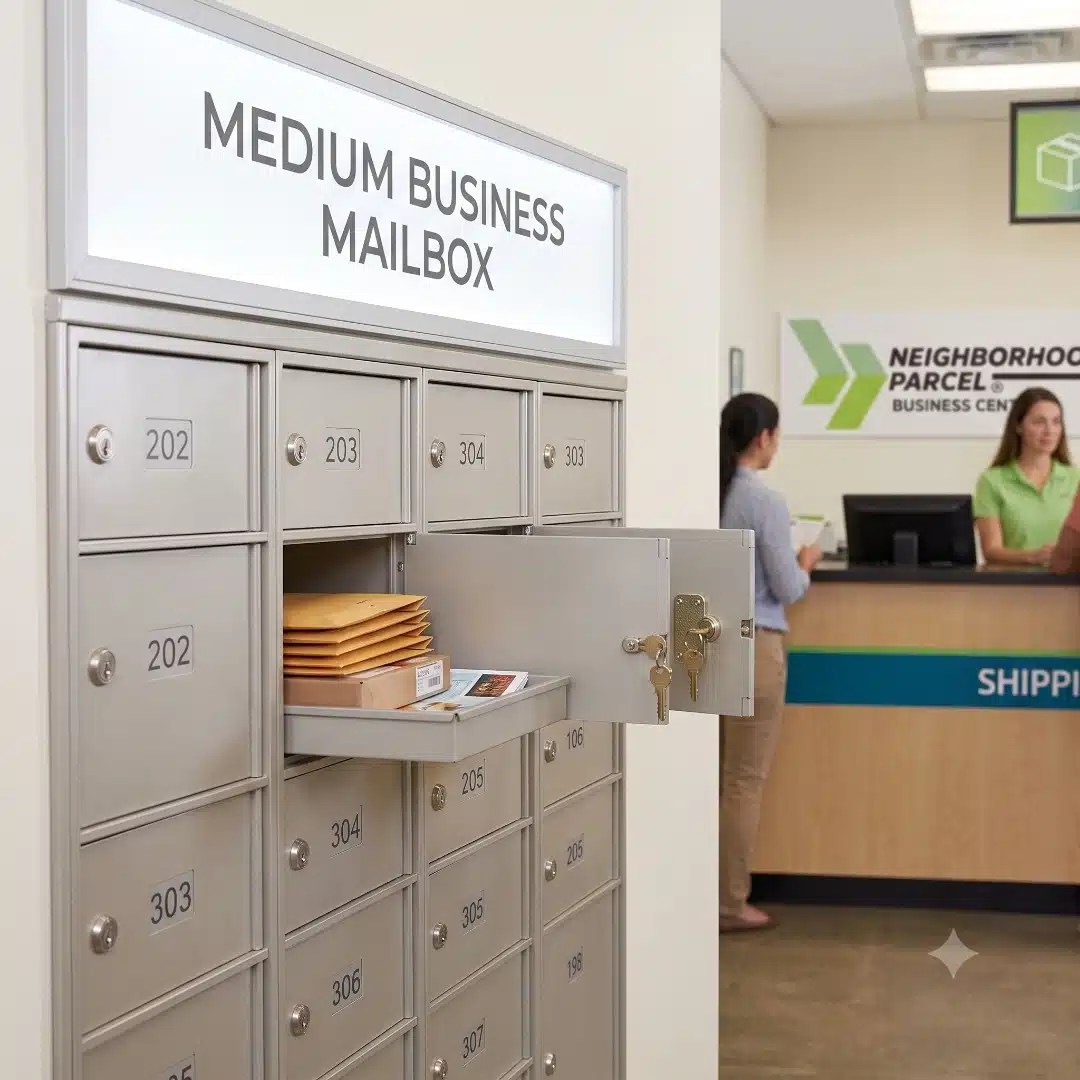
The agent covers the rare, high-stakes delivery, and the virtual mailbox covers the daily flow of business mail. Put both at one staffed location with scanning, and every piece of paper your company receives is logged and readable by you on the day it arrives, in the normal course of business. That is how we set it up for our own clients.
How it works at our counter
Our Massachusetts registered agent service runs from the same staffed business center in Tewksbury as our mailboxes, open Monday through Friday, 9:00 AM to 5:30 PM Eastern. Staff are background-checked, and mail is handled in-house, never outsourced. When legal papers or a certified letter arrive for your company, the item is logged, you get an email alert, and with mail scanning the contents become a PDF you can forward to your attorney from your phone. Originals are held for pickup or sent on through our mail forwarding service.
Which plan fits
The Gold Plan, at $595 per year, is the plan we built to be registered-agent compatible. It includes everything in Silver, which means free mail scanning and free package consolidation, plus 90 days of storage, up to 5 users, and a dedicated US fax line, which some courts and agencies still use. Annual billing includes a bonus month, 13 months for the price of 12. The agent service is priced separately, so see current pricing on the service page or ask us. Details for the mailbox are on the Gold Plan page.
Why the two addresses still matter
Even with one provider, keep the roles straight. The resident agent address goes on the state record. The mailbox address, with your suite number, goes on your invoices, website, and bank correspondence. Opening the mailbox requires USPS Form 1583, a USPS rule for every CMRA customer, and the agent appointment is a state filing. The formation side, including which address goes where on the certificate of organization, is covered in our guide to a virtual address for a Massachusetts LLC.
When you do not need the pairing
If you have a real office with staff at the front desk all day, that office can be your agent address and your mailing address, and you do not need us for either. The pairing earns its cost for home-based owners, owners who travel, companies run from out of state or abroad, and anyone who would prefer that a process server never knocks on the family’s front door.
What People Get Wrong
Most mistakes come from treating the agent as either more than it is (an owner, a manager, a filing service) or less than it is (a box to tick once and forget). These are the ones we run into most.
- “The agent is a formality.” It is a formality until the one day it is not. The role exists for the worst day in your company’s year.
- “My agent handles my annual report.” Only if you bought that service. Many administrative dissolutions start with this assumption.
- “I can use the agent’s address for all my mail.” With most providers you cannot, and mail sent there may be refused. Get a proper mailbox rental for business mail.
- “A PO Box works as the agent address.” It does not in Massachusetts. The agent needs a physical street address where a person can be handed papers.
- “Naming my accountant without asking is fine.” The person named has to agree and has to actually be at that address during business hours. An agent who does not know they are your agent will not know what to do with a summons.
- “The agent can be anywhere.” The agent must have a street address in the state where the entity is registered. A company registered in three states needs an agent in each.
- “Being my own agent is free, so it is the best choice.” It is free in dollars. You pay with a public home address and a requirement to be reachable every business day.
What a Registered Agent Service Is, and When to Hire One
A registered agent service is a business that agrees to be your company’s agent of record: it supplies the street address, staffs it during business hours, accepts legal papers and state notices, and forwards them to you. You pay for presence and reliability, plus privacy if the alternative is your home address.
Being your own agent
It is legal in Massachusetts for an owner who lives in the state to serve as the company’s resident agent, and for some people it is the right call. If you work from a commercial location, keep regular hours, and do not mind the address being public, you can save the fee. We go through the honest pros and cons in can I be my own registered agent in Massachusetts.
When a service makes more sense
- You run the business from home and do not want that address in a public database.
- You travel, keep irregular hours, or live outside Massachusetts.
- You are a foreign-registered company with no Massachusetts office.
- You would prefer not to be served in front of customers, employees, or your children.
- You want a dated record of exactly when every legal document arrived.
What to ask a provider
Ask where the address is and whether their own staff work there. Ask how fast documents are scanned and how you are notified. Ask what happens to ordinary mail that shows up at the agent address. Ask whether annual report reminders or filing are included or extra. Ask how you cancel, and how they handle the change filing when you leave. A local provider you can call, and visit, is worth more than a logo. Our services overview shows how the agent, mailbox, and Massachusetts mail forwarding pieces fit together.
Keeping Your Agent Record Current
The agent information on file with the state has to match reality at all times, and keeping it that way is the owner’s job. Problems with agents tend to come from a record that drifted out of date, not from anything dramatic.
When to update
- Your individual agent moves, retires, leaves the company, or stops being reachable in business hours.
- You were your own agent at home and you move, even across town.
- Your commercial agent resigns or you stop paying them. Agents can formally resign, and the clock then runs for you to name a replacement.
- You switch providers for price or service reasons.
How the change works
In Massachusetts, you file a change of resident agent with the Corporations Division, and the new agent has to consent to the appointment. The old agent stays on record until the filing goes through, so line up the new one before you cancel the old one. The forms, the order of steps, and the common snags are in our guide on how to change your registered agent in Massachusetts. Confirm the current forms and fees on sec.state.ma.us before you file.
A yearly five-minute check
Once a year, when the annual report comes due, look your company up in the state database. Check the agent’s name and street address, check your principal office address, and check that the email address your agent uses to reach you is one that somebody still reads. That third item causes more missed notices than the first two combined. An agent can scan a summons the day it arrives, and it does no good sitting in the inbox of an employee who left two years ago.
Frequently Asked Questions
What does a registered agent do for an LLC?
A registered agent accepts service of process, meaning lawsuits and other legal papers, and official state notices on behalf of the LLC. It must keep a physical street address in the state, be available during business hours, and forward what it receives to the company promptly. It has no role in running the business.
Is the registered agent the owner of the LLC?
No. Members own an LLC and shareholders own a corporation. The registered agent is only the designated recipient for legal and official documents. An owner may choose to serve as the agent, but the two roles are separate, and a commercial agent has no ownership stake, no management authority, and no liability for company debts.
Do registered agents forward mail?
They forward legal documents and official government notices, usually by scanning them and sending the originals. Most do not handle everyday business mail such as invoices, bank statements, or packages, and may refuse it. For ordinary mail you need a business mailing address or a virtual mailbox, which can be with the same provider.
Do registered agents file annual reports?
Not as part of the agent role. The annual report is the company’s responsibility. Some agent companies offer filing or reminders as a separate paid service. In Massachusetts the LLC annual report filing fee is $500, and corporations differ, so confirm current requirements with the Secretary of the Commonwealth’s Corporations Division.
Can a registered agent open a bank account for my LLC?
No. A bank opens a business account for the company’s owners or authorized signers, who must present formation documents, an EIN, and personal identification. The registered agent has no signing authority, is not a party to the account, and cannot access company funds. The agent’s address is also not the business’s physical address.
Why do I need a registered agent?
State law requires it so courts and government offices always have a reliable place to deliver legal papers to your company. In Massachusetts, every domestic and foreign LLC and corporation must keep a resident agent with a physical street address. Without one, you risk missed lawsuits, default judgments, and loss of good standing.
Can I be my own registered agent in Massachusetts?
Yes, if you are an individual Massachusetts resident with a physical street address in the state and you are available there during business hours. The trade-off is that your name and that address become public record in the Corporations Division database, and a process server may come to that door.
What is the difference between a registered agent and a virtual mailbox?
A registered agent is a legal appointment filed with the state to receive lawsuits and official notices. A virtual mailbox is a commercial mailing address that receives your everyday mail and packages, with scanning and forwarding. Many small companies use both: the agent for the state record, the mailbox for everything else.
Put a Reliable Person at the Door
A registered agent earns its keep on one day you hope never comes, and on that day what matters is that someone was at the counter, signed for the papers, and got them in front of you without delay. We have run the same staffed counter in Tewksbury, Massachusetts since 2007, as Neighborhood Parcel, A-rated with the BBB, handling resident agent documents and business mail under one roof.
Compare mailbox plans, including the registered-agent compatible Gold Plan, or contact us to ask about resident agent service and current pricing for your LLC or corporation.
