
Mail Forwarding Service, Virtual Mailbox
How to Get a U.S. Address: Every Option Explained (2026)
Sep
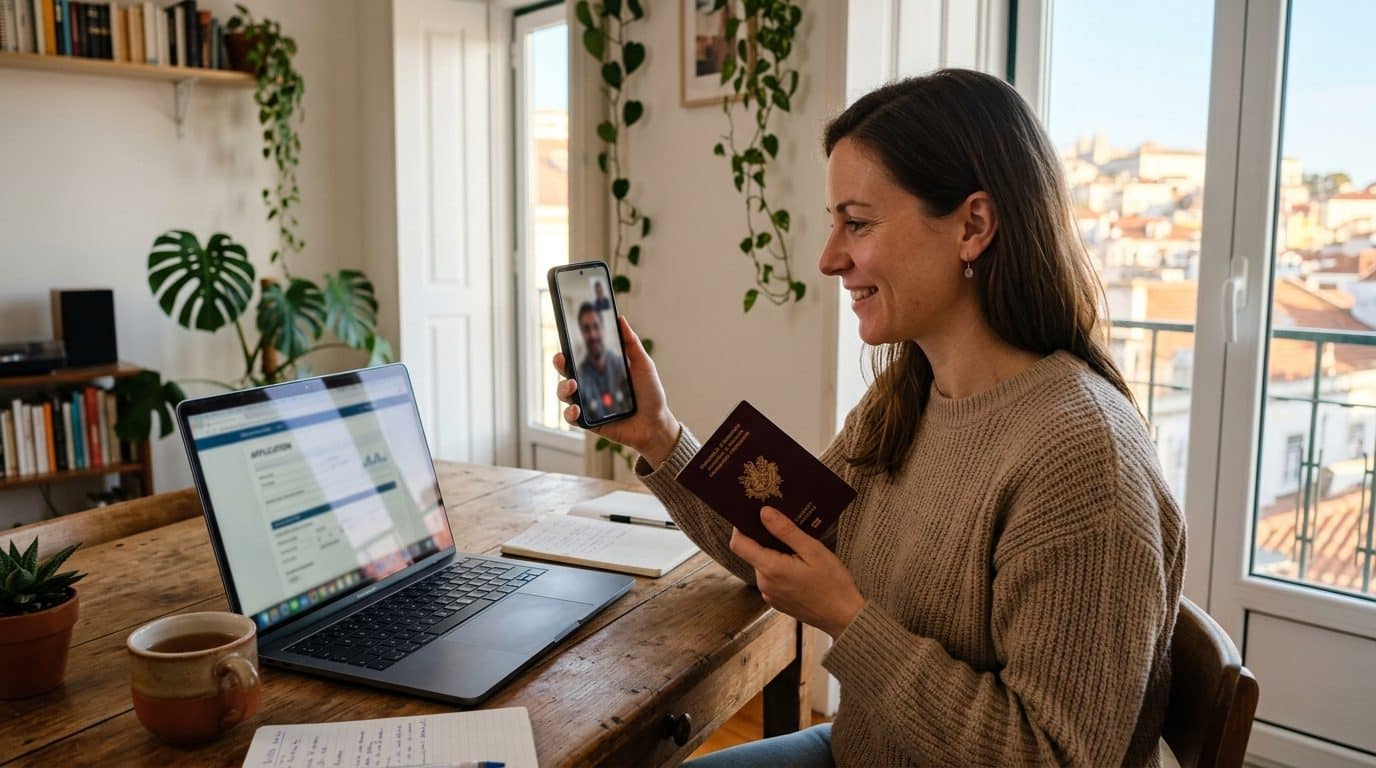
To get a US address without living in the United States, rent a private mailbox from a USPS-approved Commercial Mail Receiving Agency (CMRA). You choose a plan, complete USPS Form 1583 with two forms of ID in front of a notary (online notarization works, and a foreign passport is accepted), and receive a real street address with your own suite number, usually within a business day or so.
Key Takeaways
- There are five kinds of US address: residential, P.O. Box, CMRA street address, freight-forwarder warehouse address, and registered agent address. They are not interchangeable.
- A CMRA street address is the only option a non-US resident can get remotely that handles both letter mail and packages from every carrier.
- No rented address is proof of US residence. Not for a bank, not for immigration, not for a driver’s license, not for state taxes.
- USPS Form 1583, notarized, with two IDs, is required by federal postal rules for every CMRA mailbox. A provider that skips it is not operating legally.
- “Free US address” offers are warehouse addresses that make their money on shipping markups and fees. They do not handle letter mail.
- Our plans run $330, $450, or $595 per year with one bonus month on annual billing.
Table of Contents
- What “a US Address” Actually Means
- The Five Types of US Address
- Address Type vs. Use: The Comparison Table
- What You Can and Cannot Use a Rented Address For
- How to Get a US Address, Step by Step
- Form 1583 With a Foreign ID and an Online Notary
- How to Format Your US Address With a Suite Number
- “Free US Address” Offers and Outright Scams
- What a US Mailing Address Costs
- Mistakes to Avoid
- A Note for Americans Living Abroad
- Frequently Asked Questions
What “a US Address” Actually Means
A US address is a location the US Postal Service and private carriers can deliver to. That is all the phrase guarantees. It says nothing about who lives there, who owns it, or what legal status the person using it has.
This matters because people search for “how do I get a US address” with very different goals. A shopper in Nigeria wants an American shipping address that a retailer’s checkout will accept. A founder in Germany wants an address for an LLC and an IRS letter. A retired American in Portugal wants somewhere for bank statements to go. A student about to arrive in Boston wants somewhere to receive a laptop before the lease starts. Each goal has a right answer and a few wrong ones, and the wrong ones cost money.
So start with the question that decides everything else: what will be sent to this address, and who needs to accept it? Packages only, or letters too? Does a bank have to accept it? A state filing office? Once you know that, the choice among the five address types below is usually obvious.
The Five Types of US Address
Every US address you can obtain falls into one of five categories. Two of them are difficult or impossible to get from abroad. Three are rentable, and they do different jobs.
1. A residential address
A home you own, rent, or actually live in. It is the only address that works as proof of residence, because you reside there. You cannot rent one as a service. Borrowing a friend’s or relative’s home address is common and works for casual mail, with real limits: your mail depends on their attention, their moves, and their patience, and you are not a resident of their house for any legal purpose.
2. A USPS P.O. Box
A locked compartment inside a post office. It receives USPS mail only, so FedEx, UPS, and DHL deliveries are generally refused, and many retailers’ checkouts reject P.O. Boxes outright. Applying requires presenting ID, and a box is only useful if someone can physically empty it. For a person outside the country, a P.O. Box is close to useless. For a person who lives near the post office and receives only letters, it is the cheapest good option. We compare the two in detail in the sibling guide on virtual mailbox vs. P.O. Box.
3. A CMRA street address (private or virtual mailbox)
A Commercial Mail Receiving Agency is a private business registered with USPS to receive mail on behalf of customers. You get the building’s real street address plus a personal suite or mailbox number. Staff sign for deliveries from every carrier, log them, and then follow your instructions: scan, hold, forward, or shred. Because a CMRA is inside the postal system’s rules, it can receive letter mail, certified mail, and government correspondence, not only parcels. This is the category our service belongs to, and our explainer on what a CMRA is covers the regulation in depth.
4. A freight-forwarder warehouse address
Package forwarders give you a warehouse address in a state such as Oregon, Delaware, or Florida, with a customer code on the second line. It exists for one purpose: receive retail parcels and reship them abroad. It is a legitimate product for pure shopping. Most warehouse operations do not process letter mail, will not accept certified mail or checks, and the address is widely recognized by banks and some retailers as a forwarder, which leads to declined orders.
5. A registered agent address
Every LLC and corporation must name a registered agent with a physical street address in its state of formation. That address exists to receive service of process and official state notices for the company. It is not a personal mailing address and not a shipping address. Registered agents typically forward legal documents only and discard or return everything else. We offer a Massachusetts Registered Agent service (see current pricing on our site), and the legal rules are laid out in Massachusetts registered agent requirements.
Address Type vs. Use: The Comparison Table
The table below answers the practical question: which address works for which job. “Mailing only” means institutions may accept it for correspondence while still asking where you actually live.
| Use | Residential | USPS P.O. Box | CMRA street address | Warehouse forwarder address | Registered agent address |
|---|---|---|---|---|---|
| Online shopping, all carriers | Yes | USPS only, often rejected at checkout | Yes | Yes, some retailers block known warehouses | No |
| Letter mail and statements | Yes | Yes | Yes, with scanning | Rarely | Legal notices only |
| Bank or brokerage | Yes | Mailing only | Mailing only, at many institutions | Usually rejected | No |
| LLC business or mailing address | Yes, but it becomes public | Generally not accepted as a street address | Often yes, confirm with the state | No | Registered office only |
| Registered agent for an LLC | Only if you are in the state during business hours | No | Not by itself, needs a registered agent service | No | Yes |
| IRS mailing address | Yes | Yes | Yes | Poor choice, letters may not be processed | Not for personal mail |
| Proof of residence | Yes | Never | Never | Never | Never |
| Obtainable from outside the US | No | Not practically | Yes, with Form 1583 | Yes | Yes, for a company |
If your needs touch more than one row, the CMRA column is the one that stays “yes” the longest. That is the reason it is the usual answer for non-US residents, and the reason the virtual address category exists.
What You Can and Cannot Use a Rented Address For
A rented US address is a place to receive things. It works wherever the question is “where should we send this?” and fails wherever the question is “where do you live?” Here is how that plays out by purpose.
Shopping and an American shipping address
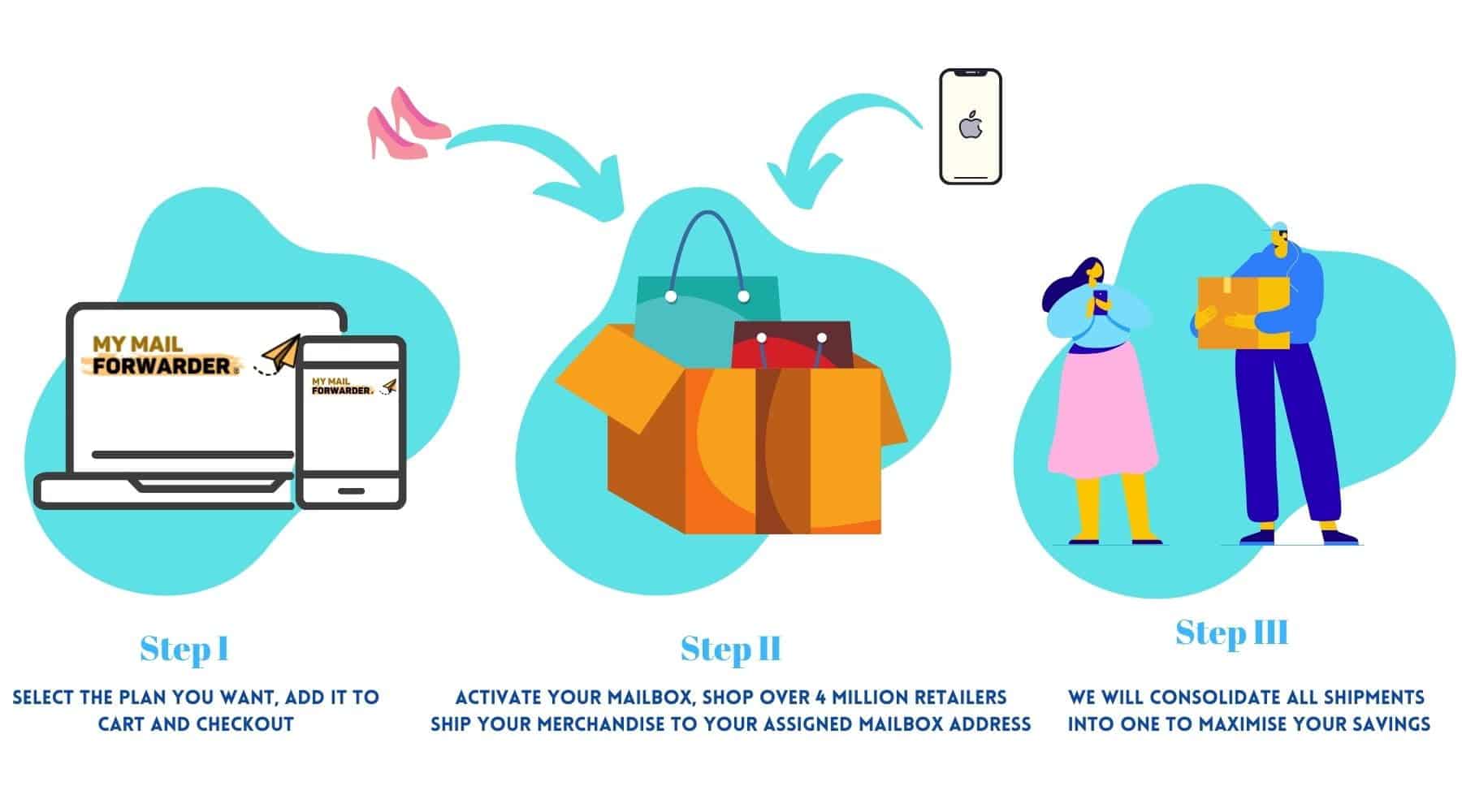
This is the simplest use. Enter the street address and suite number at checkout, the retailer ships domestically, and the package is signed for at the counter. You then forward it abroad, ideally combined with other orders. Two obstacles are worth knowing. Some retailers reject foreign-issued payment cards even when the shipping address is American. Our Personal Concierge service covers that case for a flat $99.95 per purchase request, as explained on the concierge page. And some products cannot legally leave the US or enter your country, so check before you buy.
Banking
US banks must collect a residential address for every customer under federal customer-identification rules, and their systems can tell that a CMRA address is commercial. Many institutions will accept a CMRA address as your mailing address once they have your true residential address on file, foreign or otherwise. Some will not. No honest provider can promise that a particular bank will accept a particular address, and you should be wary of any that do. If you already hold a US account, our guide to keeping a US bank account while living abroad explains how to update the mailing address without tripping a review.
An LLC or corporation
A US company formed by a non-resident needs two address roles filled. The registered agent address is a legal requirement and must be a physical location in the state with someone available during business hours. The business or mailing address is where the state, the IRS, banks, and customers write to the company. A CMRA street address commonly serves the second role, and a registered agent service serves the first. Requirements vary by state, so confirm with the filing office, which in Massachusetts is the Secretary of the Commonwealth. Our post on a virtual address for your LLC or corporation maps out which address goes where.
IRS correspondence
The IRS allows a mailing address that is different from your home, and it communicates mainly by paper letter. For a non-resident with an ITIN, an EIN, or US-source income, a stable US mailing address with same-week scanning is the practical way to meet response deadlines that run from the date on the letter. Which forms you must file is a question for a tax professional. Official instructions are at IRS.gov.
Proof of residence: never
No rented address, of any type, proves that you live in the United States or in a particular state. It will not support a visa or immigration filing, a driver’s license, in-state tuition, voter registration as a residential address, or a claim of state tax residency. Presenting a mailbox as your home on an application that asks for a residence is a misstatement, and on some forms it is a crime. If a seller tells you otherwise, walk away.
Students and sellers
Two groups have their own guides because their needs are specific. Incoming students who need to receive documents and equipment before housing is settled should read US addresses for international students. Marketplace and e-commerce sellers who need a US return address and supplier deliveries should read US addresses for international online sellers.
How to Get a US Address, Step by Step
With us, getting a US mailing address takes five steps and can be completed from any country with an internet connection. Expect to spend under an hour of your own time, most of it on the notary call.
- Choose a plan. Compare Starter, Silver, and Gold on the plans and pricing page. If you expect packages, Silver is the practical floor because package consolidation and mail scanning are free on it.
- Fill in USPS Form 1583. This is the federal form that authorizes a CMRA to receive mail in your name. You list your name, your true home address (a foreign address is fine), anyone else who will receive mail at the box, and two forms of identification.
- Have it notarized. Sign the form in front of a notary, in person or by video. The notary confirms that the person signing matches the ID. Do not sign beforehand.
- Send us the form and ID copies. We review them, register your mailbox with USPS as required, and issue your street address and suite number. Approval typically takes about one business day once the paperwork is complete and correct.
- Start using the address. Update retailers and senders. Every arrival triggers a free email alert, and you tell us what to do with each item.
After that, daily use is simple. You scan what needs reading, hold what can wait within your plan’s storage window (30, 60, or 90 days), and forward what you want in your hands, to any of 220+ countries and territories at discounted USPS, FedEx, UPS, and DHL rates. The mechanics of each step are in how mail forwarding works.
Form 1583 With a Foreign ID and an Online Notary
Form 1583 is where most non-US applicants expect trouble, and in practice it is a 20-minute task. The form requires two forms of identification: one with a photograph, and one that confirms the home address you wrote on the form.
Acceptable identification
The form’s own instructions list what is acceptable, and USPS has revised that list in recent years, so read the instructions on the current PS Form 1583 before your appointment. In general terms:
- Photo ID. A valid passport is on the list, and that includes a foreign passport. For most non-US residents, the passport is the photo ID. Government-issued IDs such as a US driver’s license or state ID card also qualify for people who hold them.
- Address ID. A second document that ties you to the home address on the form. The instructions name documents such as a current lease, a mortgage or deed of trust, a vehicle registration, a home or vehicle insurance policy, or a driver’s license. Foreign versions of these are what non-US applicants submit.
- Not acceptable. The instructions specifically exclude some documents, including Social Security cards, birth certificates, and credit cards. A utility bill, which many people assume will work, may not be on the current list. Check before you rely on it.
The name and address on your IDs must match what you write on the form. If your address document is not in English, tell us in advance so we can advise what supporting copy helps.
Online notarization
Remote online notarization means a commissioned US notary verifies your identity and watches you sign over a live video session, then applies a digital seal. It is accepted for Form 1583, and it is how most of our customers abroad complete the form. You need your passport, a device with a camera, and a stable connection. If you prefer paper, a notary at a US embassy or consulate is an alternative, though appointments can take weeks. A local foreign notary may or may not be acceptable, so ask us first.
Our USPS Form 1583 guide goes box by box, including the fields people most often get wrong (the business section, and the list of additional recipients).
Why the form exists
Form 1583 creates a record of who is behind every private mailbox, which keeps anonymous mail drops out of the postal system. It is the reason a CMRA address is trusted by senders in a way a warehouse code is not. A company that offers you a “US mailing address” for letter mail without a notarized 1583 is either not a CMRA or not following the rules, and either way your mail is at risk of being refused.

How to Format Your US Address With a Suite Number
Write the address exactly as your provider issues it, with your personal number on the same line as the street address or on the line directly below your name. The number is how staff match an envelope to your account among hundreds of others.
A US address has this structure:
- Line 1: your full name, as it appears on Form 1583 (or your registered business name)
- Line 2: street number and street name, followed by your suite or mailbox number
- Line 3: city, two-letter state abbreviation, and ZIP code
- Line 4, for senders outside the US only: UNITED STATES
In our case the third line reads Tewksbury, MA, followed by the ZIP code. The street line and your number come in your welcome email. A few practical rules:
- Use the designator you are given. USPS standards for private mailboxes call for “PMB” or the “#” sign before the number, and many CMRAs, ours included, issue the number as a suite. Use the exact form in your welcome email so automated sorting and our counter staff both read it correctly.
- When a checkout form has “Address Line 2”, put the suite number there. If the form has only one line, put it after the street name, separated by a space.
- Never drop the number. Mail without it still reaches the building, then waits while staff work out whose it is.
- Use the name on your form. A parcel addressed to a nickname, a maiden name, or a company that is not listed on your 1583 gets held for verification.
- Phone number fields. If a retailer requires a US phone number, do not invent one. Ask us what to enter.
- “My US address” in retailer accounts. Save it once as your default shipping address. Keep your billing address as the real one on your card statement, or the payment may be declined.
“Free US Address” Offers and Outright Scams
A free US address is a warehouse address, and the company recovers its costs elsewhere. That is a business model, not a scam. Actual scams exist as well, and the two are worth telling apart.
How free warehouse addresses make money
Nobody rents warehouse space, pays staff, and receives your parcels for nothing. The revenue comes from shipping rates with a margin built in, per-package handling or “processing” fees, charges for consolidation, photos, and repacking, short free-storage windows followed by daily storage fees, and currency conversion spreads. None of that is dishonest if it is disclosed. It means “free” describes the signup, not the year. A shopper who ships one small box annually may well do best with a free account. A person who ships monthly, or needs letters handled, usually does not.
How a warehouse address differs from a CMRA mailbox
- Letter mail. Warehouses are built around barcoded parcels. Many refuse or discard envelopes. A CMRA receives letters, certified mail, and checks as its core work.
- Identity. A warehouse account may need only an email address. A CMRA requires notarized Form 1583, which is why senders trust the address.
- Who touches your mail. Large forwarders often run high-volume facilities or outsource handling. At our facility, mail is handled in-house by background-checked staff and is never outsourced.
- Acceptance. Banks and some retailers keep lists of known forwarding warehouses and decline them. A CMRA street address is a normal commercial address, though it is still identifiable as commercial.
- Pricing shape. Warehouse: low fixed cost, higher variable cost. CMRA plan: a fixed annual fee, with scanning and consolidation included on the higher tiers and shipping at discounted carrier rates.
The scams
Be careful with any of the following. A seller offering a “US residential address” for bank or visa applications is selling a false statement with your name on it. A site that issues an address instantly with no identity check will lose your mail the first time USPS audits the location. A “work from home” offer that pays you to receive and reship parcels is a stolen-goods pipeline, and the person whose name is on the label carries the legal exposure. Our post on reshipping scams and parcel mules describes the pattern. Finally, check that the provider exists: a street address you can find on a map, a phone number a person answers, years in operation, and a rating with an independent body. We have operated in Tewksbury, Massachusetts since 2007 and are A-rated with the BBB.
What a US Mailing Address Costs
With us, a US mailing address costs $330 to $595 per year depending on plan, and annual billing includes one bonus month, so you get 13 months for the price of 12. Shipping is separate and billed at discounted carrier rates only when you approve a shipment.
- Starter Plan, $330 per year. The address, all carriers accepted, free email alerts, 30 days of storage. Scanning and consolidation are available as paid add-ons. About $25.38 per month across 13 months.
- Silver Plan, $450 per year. The most popular. Adds free mail scanning, free package consolidation, 60 days of storage, and up to 3 users. About $34.62 per month across 13 months.
- Gold Plan, $595 per year. Everything in Silver plus 90 days of storage, up to 5 cubic feet, up to 5 users, a dedicated US fax line, and registered-agent compatibility. About $45.77 per month across 13 months.
Shorter 3-month and 6-month terms exist for people who need an address for a fixed period. For shoppers, the number that matters most is consolidation: combining several orders into one carton typically cuts the international shipping cost 30% to 40% per batch, which on a few shipments a year exceeds the price gap between Starter and Silver. Our international shipping savings guide shows the arithmetic, and how much a virtual mailbox costs compares fee structures across the industry, including the add-on charges to look for.
Mistakes to Avoid
The same handful of errors cause most of the problems new customers run into. Each is easy to prevent.
Choosing the address type by price alone. A free warehouse address is the right tool for one parcel a year and the wrong tool for a bank statement. Decide what will be sent to the address first.
Calling it your residence. When a form asks where you live, give your real home address, foreign or not, and list the US address as the mailing address. This one habit prevents frozen accounts.
Signing Form 1583 before the notary session. The notary must witness the signature. A pre-signed form has to be redone.
Leaving people off the form. Spouses, adult children, and business names all need to be listed. Unlisted names mean held mail.
Buying first, asking later. Perfume, aerosols, loose lithium batteries, knives, supplements, and many foods are restricted by carriers or by your country’s customs. Our list of prohibited commodities takes two minutes to read.
Forwarding every item separately. International rates punish small boxes. Let orders gather within your storage window and ship once.
Ignoring the arrival emails. Storage windows are generous but finite, and a letter from a tax agency does not improve with age.
A Note for Americans Living Abroad
If you are a US citizen overseas, you need a US address for different reasons than a foreign shopper does, and the same type of address solves them. Your bank, brokerage, the IRS, the Social Security Administration, and your state election office all write on paper, and many of them handle foreign addresses badly.
A CMRA address gives those senders one permanent destination that does not depend on a relative’s goodwill. You read scans the week they arrive and forward originals, such as a replacement card, by tracked courier. What it does not do is settle your state tax domicile. A mailing address in Massachusetts does not make you a Massachusetts resident, and abandoning a former state’s residency takes more than changing where your mail goes. Read our post on state residency, taxes, and your mail and confirm your position with a tax professional. The service itself is described on our mailbox rental and mail forwarding pages.
Frequently Asked Questions
How do I get a US address if I do not live in the United States?
Rent a mailbox from a USPS-approved Commercial Mail Receiving Agency. Choose a plan, complete USPS Form 1583 with two forms of ID, have it notarized in person or by online video notary, and submit it. You then receive a real US street address with a personal suite number that accepts mail and packages from every carrier.
Can I get a US mailing address with a foreign passport?
Yes. The Form 1583 instructions list a passport as acceptable photo identification, and a foreign passport qualifies. You also need a second document confirming your home address, such as a lease, vehicle registration, or insurance policy. USPS updates the accepted list occasionally, so read the instructions on the current form before your notary session.
Is a free US address safe to use?
Free addresses from established package forwarders are generally safe for retail parcels. They are warehouse addresses funded by shipping margins, handling fees, and storage charges, and most do not process letter mail, checks, or certified mail. For bank statements, tax letters, or business mail, use a CMRA mailbox that required Form 1583.
Can I use a virtual mailbox address to open a US bank account?
Not as your residential address. US banks must record where you actually live, and their systems identify CMRA addresses as commercial. Many banks accept a CMRA address for mailing once your true residential address is on file, and some do not. No provider can guarantee acceptance, so ask the bank directly.
Does a US address count as proof of residence?
No. A rented address of any kind, whether a P.O. Box, CMRA mailbox, warehouse address, or registered agent address, shows only where your mail goes. It cannot support immigration filings, a driver’s license, in-state tuition, or a claim of state tax residency. Presenting it as your home on an official form is a misstatement.
Can I use the address for my LLC?
A CMRA street address commonly serves as an LLC’s business or mailing address. The registered agent role is separate and requires a physical in-state address staffed during business hours, which a registered agent service provides. Requirements vary by state, so confirm with the state filing office. In Massachusetts that is the Secretary of the Commonwealth.
How should I write my US address with the suite number?
Put your full name on the first line, the street address followed by your suite or mailbox number on the second, and the city, state abbreviation, and ZIP code on the third. If a checkout form has an Address Line 2 field, enter the suite number there. Always use the exact format in your welcome email.
How much does it cost to get a USA address?
At MyMailForwarder.com the Starter Plan is $330 per year, Silver is $450, and Gold is $595. Annual billing includes one bonus month, so you receive 13 months for the price of 12. Silver and Gold include free mail scanning and free package consolidation. Forwarding postage is billed separately at discounted carrier rates.
Get a Real US Address This Week
A real Massachusetts street address with your own suite number, at a staffed facility that has handled customers’ mail in-house since 2007. Open Monday through Friday, 9:00 AM to 5:30 PM Eastern, and reachable by email from any time zone. Compare the three plans, or contact us with your situation and we will tell you plainly whether this is the right kind of address for it.
