
Mail Forwarding Service, Virtual Mailbox
Managing Mail for an Estate: The Executor’s Complete Guide to a Deceased Person’s Mail (2026)
Jul
When someone dies, their mail does not stop. Bank statements, insurance notices, bills, and subscription renewals keep arriving at their address, often for a year or more. As the executor or personal representative, you can redirect that mail. The United States Postal Service generally allows an appointed representative to file a change of address on behalf of a deceased person, typically by visiting the local post office in person with proof of appointment, such as letters testamentary issued by the probate court. Requirements vary by location and situation, so confirm the specifics with your post office and the estate attorney before you go.
Here is the part many new executors do not expect: the mail itself is one of your most valuable tools. Almost every account, debt, insurance policy, and recurring obligation in the deceased person’s life will surface in the mailbox eventually. Managing mail for an estate is not a chore to rush through. It is the master index of everything you have been asked to settle.
This guide covers what happens to a deceased person’s mail, how to take control of it, how to protect the estate from identity theft, and a month-by-month workflow you can follow even from hundreds of miles away. One note before we begin: this article is general information, not legal advice. Probate rules differ by state, so lean on the probate court and the estate’s attorney for your specific situation.
Table of Contents
- What Happens to a Deceased Person’s Mail
- Why Mail Is the Master Index of the Estate
- Confirm Your Authority Before You Touch the Mail
- How to Redirect a Deceased Person’s Mail Through USPS
- The Long-Distance Executor’s Problem
- Protecting the Estate From Identity Theft and Mail Theft
- A Month-by-Month Mail Workflow for Executors
- A Simple Sorting System for Estate Mail
- How a Virtual Mailbox With Scanning Helps Executors
- Why Executors Choose MyMailForwarder
- Take the Mail Off Your Worry List
- Frequently Asked Questions
What Happens to a Deceased Person’s Mail
Nothing happens automatically. The Postal Service has no way of knowing that a customer has died, so carriers keep delivering as if nothing changed. If a spouse or family member still lives in the home, the mail simply lands in their hands, and the practical question becomes who may open it and act on it. If the home is now empty, the situation is more urgent. Mail piles up, circulars stack up on the porch, and the property starts to look unoccupied. That invites two problems at once: theft of documents full of personal information, and missed deadlines hiding inside unopened envelopes.
In the first days after a death, you have three sensible options. First, ask the post office to hold mail temporarily; a hold is short term, but it buys breathing room during the week of the funeral. Second, have a trusted person nearby collect the mail daily. Third, once you are formally appointed, redirect the mail to an address you control, whether your own home or a dedicated mailbox service set up for the estate.
What you should not do is let the mailbox overflow, and you should not throw anything away yet. Even envelopes that look like junk can matter early on: a “final notice” from an insurer, a bank card in a plain white envelope, a letter from a state unclaimed property office. Certified and official notices deserve special care, because courts, tax agencies, and creditors use them for time-sensitive matters. If a signature-required slip shows up, treat it as a priority; our guide to certified mail and legal notices explains what those pieces usually mean and why they cannot wait.
Why Mail Is the Master Index of the Estate
Executors are asked to do something close to impossible: reconstruct another person’s entire financial life with incomplete records and no instructions. Passwords are unknown. Files are scattered. The person who could explain everything is gone. The mail solves more of this puzzle than any other single source, because nearly every institution that held the deceased person’s money, or was owed money by them, sends paper at some point in the year.
Watch a full cycle of mail and the estate assembles itself in front of you. Bank and brokerage statements reveal accounts you never knew existed. Premium notices point to life, home, auto, and long-term care policies that may pay benefits or need cancellation. Card statements and renewals expose subscriptions quietly draining the estate’s cash. Property tax bills and mortgage statements confirm real estate obligations. Medical bills map the final months of care. Dividend checks, pension statements, and refunds arrive as small assets in their own right.
Some of the most important pieces only come once a year. Tax documents arrive in late January and February. Policy renewals, safe deposit box invoices, and property tax assessments each have their own season. This is why estate attorneys often suggest keeping the deceased person’s mail flowing to a controlled address for at least a full twelve months. Cut it off after eight weeks and you may never learn about the brokerage account that only mails an annual statement.
Treat every envelope as a data point. Log the sender, the account number if there is one, and the action it triggered. By the end of the first year, that log becomes something close to a complete inventory of the estate: assets to collect, debts to evaluate, services to cancel, agencies to notify. If the terminology on those envelopes is unfamiliar, our mail forwarding glossary is a quick reference for the postal terms you will keep running into.
Confirm Your Authority Before You Touch the Mail
Being named executor in a will is not the same as having legal authority to act. That authority generally begins when the probate court formally appoints you and issues documentation, commonly called letters testamentary for an executor named in a will, or letters of administration when there is no will. Names and procedures vary by state, so let the probate court and the estate attorney tell you what applies in your case.
This distinction matters for mail specifically. Tampering with another person’s mail is taken seriously under federal law, and the safest path is to have your appointment paperwork in hand before you begin systematically opening, redirecting, or acting on the deceased person’s correspondence. Once appointed, the personal representative generally steps into the deceased person’s shoes for estate purposes, and handling their mail is a normal part of that role. Until then, securing the mail unopened is the prudent move.
A few practical steps make everything easier. Request several certified copies of your appointment documents, because banks, agencies, and yes, the post office, may each want to see or keep one. Keep a copy in a folder you bring to every estate errand. Ask the attorney whether your state’s creditor notice requirements affect how you handle claims that arrive by mail. And if family members live in the deceased person’s home, agree early that all mail addressed to the person who died goes into one basket for you, unopened, so nothing is lost or accidentally discarded.
One more note: mail addressed jointly to a surviving spouse and the deceased is usually straightforward for the spouse to handle, but mail addressed solely to the deceased belongs to the estate’s process. When in doubt, set it aside and ask the attorney.
How to Redirect a Deceased Person’s Mail Through USPS
You cannot simply file the normal online change of address for someone who has died. Redirecting a deceased person’s mail is treated differently, for good reason: the Postal Service wants to be sure the requester genuinely has authority over the deceased person’s affairs. In practice, that usually means visiting the post office that serves the deceased person’s address, in person, with documents in hand.
What should you bring? Typically, proof of your appointment as executor or personal representative, such as letters testamentary or a similar court document, plus your own government-issued photo identification. Some offices ask for additional paperwork or handle the request slightly differently, and requirements can change, so call the local post office ahead of time and ask exactly what they need. Do not assume; a wasted trip is frustrating, and a wasted trip when you flew in from out of state is worse.
Once accepted, the redirection works like a forwarding order: mail addressed to the deceased at the old address is rerouted to the address you designate. Keep its limits in mind. Forwarding orders are time-limited, different classes of mail forward for different periods, and some marketing mail does not forward at all. The order also eventually expires, which is why you should update each sender directly with the estate’s new mailing address as you work through the mail, rather than relying on forwarding forever.
Where should the mail go? Some executors redirect it to their own home. That works, but it mixes estate mail into your personal pile and hardwires the flow to one person and one location. Others redirect it to the estate attorney’s office, which gets expensive if the office bills time for handling it. A third option, covered below, is a dedicated mailbox address for the estate with a service that scans what arrives, so you, a co-executor, and the attorney can all see the same mail without anyone standing at a mailbox.
The Long-Distance Executor’s Problem
Many executors do not live in the same city as the person who died. Adult children settle estates for parents two states away. A sibling in Texas handles a brother’s affairs in Massachusetts. The will names the most responsible person in the family, not the closest one. And mail, stubbornly physical, becomes the hardest part of the job to do from a distance.
The improvised solutions all have costs. Flying back every few weeks to work through a pile of envelopes burns money and vacation days. Asking a neighbor to collect the mail works for two weeks, then becomes an imposition, and it puts sensitive financial documents in the hands of someone with no legal role in the estate. Forwarding everything to your own house means every question from the attorney requires you to dig through your own pile, photograph documents on the kitchen table, and email them around one by one.
There is also a timing problem. A creditor’s notice with a response deadline can land while you are traveling. A check can sit in an unwatched mailbox for three weeks. When you manage an estate remotely, you need to know what arrived today, not what you will discover on your next trip.
Families who have cared for aging parents from a distance know this pattern well. We wrote about the caregiving version in our guide to managing a parent’s mail as a caregiver, and many families move directly from that arrangement into estate administration when a parent passes. The core idea carries over: get the mail flowing to one stable, controlled address, make it visible to the people who need it from anywhere, and stop letting geography set your schedule.
Protecting the Estate From Identity Theft and Mail Theft
It is an ugly reality, but identity thieves target the deceased. Obituaries announce a name, an approximate address, and the fact that no one will be monitoring that person’s credit. An unattended mailbox at a vacant house supplies everything else: account statements, pre-approved credit offers, replacement cards, and checks. Fraud committed in a deceased person’s name creates real headaches, and it usually falls to the executor to clean up.
The good news is that a handful of calm, early steps close most of the openings. Notify the credit bureaus, Equifax, Experian, and TransUnion, that the person has died and ask that the file be flagged as deceased, which helps block new credit in their name. The Social Security Administration is typically notified by the funeral home, but confirm it. Send death certificates to banks and card issuers as you identify them, and ask each to close or freeze accounts per the attorney’s guidance.
Then deal with the mail itself, because the mailbox is the physical attack surface. Never let mail accumulate at an empty house. Redirect it promptly to an address where a real person receives it, logs it, and locks it up. Register the deceased person’s name with the direct marketing industry’s deceased suppression list, which cuts advertising mail over time, and opt out of prescreened credit offers. Shred anything you discard, and deposit arriving checks into the estate account quickly instead of letting them sit.
Stolen mail is also the raw material for check fraud, as criminals wash and alter paper checks. An estate, with refunds and dividend payments trickling in for months, is exposed to exactly this risk. Our guide on preventing mail theft and check fraud covers the warning signs and habits that keep paper payments safe. The most effective habit is simple: keep the estate’s mail flowing to a secure, staffed, controlled address instead of an unwatched residential box.
A Month-by-Month Mail Workflow for Executors
Estate mail settles into a rhythm if you give it structure. This timeline is a general framework, not a legal schedule; your probate court and attorney set the real deadlines. Use it to pace yourself and to know what mail to expect when.
| Phase | Mail focus | Key actions |
|---|---|---|
| Weeks 1 to 2 | Secure the flow | Hold or collect mail daily, open nothing you are unsure about, gather appointment documents |
| Month 1 | Redirect and log | File the deceased change of address in person, start a mail log, flag deadlines |
| Months 2 to 3 | Discover accounts | Statements and bills reveal accounts; notify banks, insurers, and agencies; cancel services |
| Months 4 to 6 | Claims and cleanup | Watch for creditor claims and legal notices, chase insurance payouts, junk mail declines |
| Months 7 to 12 | Annual stragglers | Catch tax forms, annual statements, renewals, and refunds; update senders to the estate address |
Weeks one and two are about containment, not progress. Someone reliable collects the mail daily, or a temporary hold keeps it at the post office. Nothing gets thrown out. You are gathering, grieving, and getting appointed. That is enough.
Month one is when you take control. With appointment documents issued, visit the post office and redirect the mail to your controlled address. Open a dedicated log with columns for date received, sender, account reference, and action taken. Anything with a deadline goes on a calendar the same day it arrives.
Months two and three are the discovery window, when the first full billing cycles land and the estate’s shape emerges. Each new sender gets a decision: notify and close, notify and continue (utilities on a house you are selling, insurance on property the estate still owns), or cancel outright. Expect the heaviest mail volume of the whole process here.
Months four through six shift toward claims. Depending on your state’s process, creditors may submit claims during a defined window, some by certified mail. Review everything with the attorney before paying anyone. Meanwhile, your earlier cancellations start working and volume drops noticeably.
Months seven through twelve are about patience. The stragglers arriving now, tax documents, annual statements, dividend checks, unclaimed refunds, are exactly the items you would have missed with a short-term approach. Keep the address live through at least one tax season before winding it down.
A Simple Sorting System for Estate Mail
Volume is manageable when every envelope has an obvious destination. Executors who struggle are usually facing an undifferentiated pile with no system. Borrow this one: every piece of estate mail goes into one of four categories the day you see it.
- Act now. Anything with a deadline, a signature requirement, or a check inside. Court notices, tax correspondence, creditor claims, insurance forms, and certified mail live here, handled or sent to the attorney within days, not weeks.
- File for the record. Statements, confirmations, and benefits letters that need no action but document the estate. These go into labeled folders, physical or digital, organized by institution. Future you, preparing the estate’s accounting, will be grateful.
- Cancel and notify. Subscription renewals, memberships, and recurring services. Each triggers a call or letter: this person is deceased, close the account, refund any prepaid balance to the estate. Log the date you notified them.
- Shred. True junk with the deceased person’s name on it. Never recycle it intact; pre-approved credit offers in a curbside bin are a gift to fraudsters.
Two refinements make the system stronger. First, digitize the “act now” and “file” categories. A phone scan or, better, a mail service that scans automatically, means the attorney, the accountant, and any co-executor can see a document minutes after it arrives. Second, review the log monthly. Patterns appear: a bill that stopped arriving may mean an account was closed or, more worryingly, that someone changed its address without your knowledge. The log is your early warning system and, eventually, your proof of diligence if a beneficiary ever questions how the estate was handled.
Expect the emotional weight, too. Sorting a parent’s or spouse’s mail means seeing their name over and over, canceling the magazine they loved, reading condolence cards mixed in with collection notices. Give yourself permission to work in short sessions. Twenty minutes twice a week beats one grim marathon every time.
How a Virtual Mailbox With Scanning Helps Executors
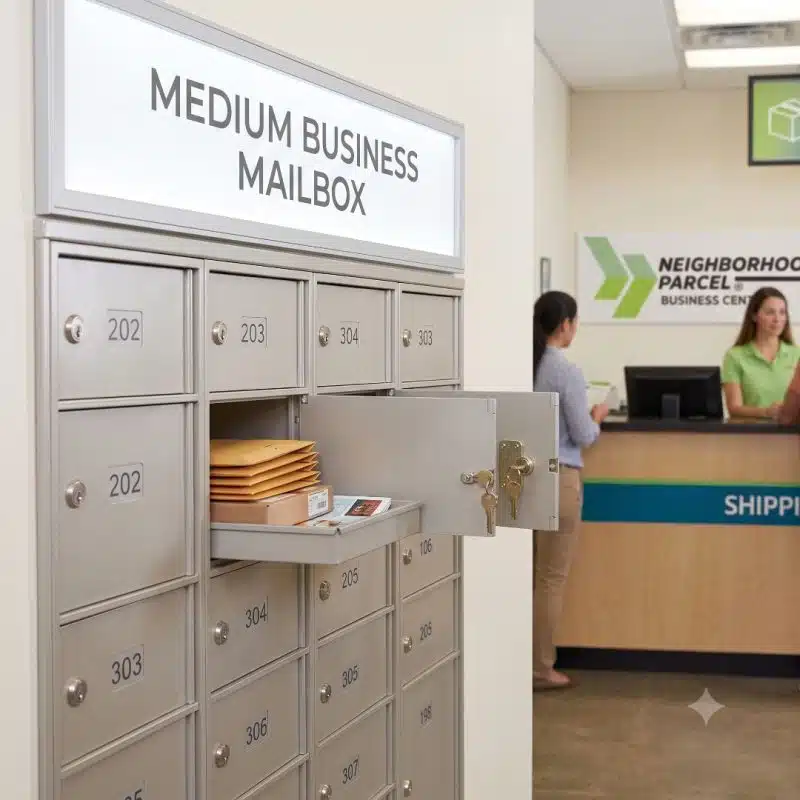
Here is where the pieces come together for long-distance executors. A virtual mailbox gives the estate its own real street address at a staffed facility. You redirect the deceased person’s mail there once; from then on, every arriving envelope is logged and you get an email alert. Ask for a scan and the contents show up as a document you can read on your phone, forward to the attorney, or file in your digital estate folder. Checks and originals can be forwarded to you on request; everything else is stored securely or shredded on your instruction.
This is not a PO Box. The service behind it is a Commercial Mail Receiving Agency, or CMRA, a business authorized by USPS to receive mail for its customers at a real street address. If the concept is new, our explainer on what a CMRA is covers how these services work. Because the address is a genuine street address with a suite number, it also accepts the couriers that PO Boxes cannot, which matters when an insurer sends a payout by FedEx.
To open a mailbox, USPS requires a notarized authorization form called Form 1583, which designates the CMRA to receive mail on your behalf and verifies your identity with two forms of ID. It is a one-time step that exists to protect you; our USPS Form 1583 guide walks through it line by line. Setting up service for an estate has a few extra wrinkles, so talk to the provider and your attorney about how to structure the box, in your name as personal representative or otherwise, so mail for the deceased and the estate is received properly.
The payoff is hard to overstate. The estate’s mail lives in one reviewable place. Nothing sits in a snowbank in front of a vacant house. A co-executor in another state sees the same scans you do. And the cost is modest compared to a single flight back; see our breakdown of what a virtual mailbox costs to compare it against what you spend on trips and time now.
Why Executors Choose MyMailForwarder
MyMailForwarder is a USPS-approved Commercial Mail Receiving Agency based in Massachusetts, operating since 2007 with an A rating from the Better Business Bureau. Estates are exactly the kind of sensitive, deadline-driven mail we handle every day, especially for executors managing a Massachusetts estate from another state or another country.
Your estate mailbox comes with a real Massachusetts street address with a suite number, not a PO Box, so it receives mail and packages from USPS, FedEx, and UPS alike. When mail arrives, you get an email alert. Request a scan and you can read the document the same day it lands, wherever you are. Need the original, a check to deposit, a document to sign? We forward to more than 220 countries via USPS, FedEx, or UPS, whichever suits the item and the urgency.
Plans are straightforward: $330, $450, or $595 per year, each with one bonus month, so you get thirteen months of service for a year’s price. That thirteenth month matters for estates, since a full year plus tax season is exactly the window most executors need. Storage runs 30, 60, or 90 days by plan, and the Silver and Gold plans include free consolidation of multiple mail pieces into one shipment, which typically saves 30 to 40 percent on forwarding when you batch a month of documents to the attorney.
Some estates need more than mail handling: a document received, scanned, printed, signed, and returned, or a package handled in a way you cannot arrange from three time zones away. Our personal concierge service exists for these one-off tasks. And because we are a small Massachusetts business rather than a call center, you can call (978) 851-0199 and talk through your estate’s situation before committing to anything.
Take the Mail Off Your Worry List
You did not ask for this job, and you are probably doing it on top of a full life and real grief. The mail is one part of estate administration you can genuinely systematize: redirect it once, let it flow to a single secure address, review scans on your schedule, and let your log build the estate’s inventory for you. Every envelope handled promptly is a deadline that will not surprise you.
If a dedicated estate mailbox sounds right, compare our mailbox plans to see which storage and forwarding options fit the estate, then see how to apply; setup can be completed remotely, notarization included, without a trip to Massachusetts. If your situation has a complication you want to talk through first, call us at (978) 851-0199. We have been receiving other people’s important mail since 2007, and we are glad to help you carry this part of the load.
Frequently Asked Questions
Can I file the regular online change of address for someone who has died?
Generally, no. Redirecting a deceased person’s mail is handled differently from an ordinary move, and it typically requires an in-person visit to the post office serving the old address, with proof of your appointment such as letters testamentary and your own photo ID. Requirements vary, so call that post office first and ask exactly what to bring.
Is it legal for an executor to open a deceased person’s mail?
Once the probate court formally appoints you as executor or personal representative, opening and managing the deceased person’s mail is generally a normal part of administering the estate. Before appointment, the safer course is to collect and secure mail unopened. Rules vary by state and situation, so confirm your authority with the probate court or the estate’s attorney.
How long should I keep the estate’s mail coming to a controlled address?
Plan on at least twelve months, and through one full tax season. Many important items arrive only annually: tax forms in late January and February, policy renewals, annual statements, and property tax bills. Cutting the mail off after a few weeks risks missing accounts and assets that only surface once a year in the mailbox.
What if I am settling a Massachusetts estate from another state or overseas?
A virtual mailbox solves the distance problem. Redirect the estate’s mail to a Massachusetts street address, receive email alerts as items arrive, read scans from anywhere, and have originals or checks forwarded when needed. MyMailForwarder forwards to more than 220 countries via USPS, FedEx, and UPS, so an executor abroad can manage everything remotely.
How do I stop junk mail addressed to the person who died?
Register the deceased person’s name with the direct marketing industry’s deceased suppression list, which reduces advertising mail over time, and opt out of prescreened credit card offers. Volume declines gradually rather than overnight. In the meantime, shred anything you discard, since pre-approved offers in the trash are a common raw material for identity theft.
What is USPS Form 1583 and why does a mailbox service require it?
Form 1583 is the USPS authorization that lets a Commercial Mail Receiving Agency legally receive mail on your behalf. You complete it once when opening the mailbox, provide two forms of identification, and have it notarized, which can usually be done online. It is a consumer protection measure that verifies who controls the box, and it is required for every CMRA customer.
