
Virtual Mailbox, American Expats, Mail Forwarding Service
How to Remove Your Address from the Internet: The Complete 2026 Guide
Jul
To remove your address from the internet: search for yourself, opt out of the major people-search sites and data brokers one by one, request removal of exposed results from search engines, tighten the public records you can control, and then switch your mailing address to a private alternative such as a virtual mailbox so your home address stops flowing back into the data supply. Removal without prevention is temporary: data brokers refresh their databases constantly, and any record that still carries your home address will eventually repopulate the sites you just cleaned.
This guide walks through the full process in plain language: where your address leaks from, how to find every copy, how opt-outs actually work, what you can and cannot do about public records, and how to build a durable privacy layer. It is written for anyone with a reason to keep a home address off the open web: home-based business owners, landlords, public-facing professionals, content creators, and people dealing with harassment or leaving an unsafe situation.
None of this requires special software, just a few hours of focused work, a simple maintenance routine, and one structural change: giving the world a mailing address that is not the place where you sleep.
Table of Contents
- How Your Home Address Ends Up Online in the First Place
- Step 1: Audit Your Exposure Before You Remove Anything
- Step 2: Opt Out of People-Search Sites and Data Brokers
- Step 3: Remove Your Address from Google and Other Search Results
- Step 4: Deal with Public Records, Property Data, and Government Files
- Step 5: Extra Protections If You Have Safety Concerns
- Step 6: Stop the Everyday Leaks That Re-Expose Your Address
- Step 7: Use a Virtual Mailbox So Your Home Address Stops Circulating
- Special Situations: Business Owners, Landlords, and Public-Facing Professionals
- How Long Removal Takes and How to Keep It That Way
- Ready to Take Your Home Address Off the Grid?
- Frequently Asked Questions
How Your Home Address Ends Up Online in the First Place
Before you can remove your address from the internet effectively, it helps to understand where the copies come from. Your home address flows into public view through several independent channels, and each one feeds the others.
The first channel is public records. Property deeds, court filings, business registrations, professional licenses, and in many states voter files are public by law or available on request. County assessor websites often publish the owner name and mailing address for every parcel, so if you own your home in your own name, that link is a public record that data companies harvest at scale.
The second channel is commercial data. Warranty cards, store loyalty programs, catalog orders, sweepstakes entries, and magazine subscriptions can all be sold or shared with marketing data companies, and credit header data, the identifying portion of your credit file, circulates among verification services.
The third channel is the people-search industry. Companies such as Whitepages, Spokeo, and BeenVerified buy, license, and scrape data from the first two channels, then package it into profiles anyone can view: current address, previous addresses, age, relatives, phone numbers. These sites are the most visible symptom, but they sit downstream of deeper sources.
The fourth channel is you and the people around you: social media posts, online resumes, fundraising pages, a business website using your home address, or a relative listing you as a contact.
The takeaway: removal has to happen at multiple layers, and prevention matters as much as deletion, which is why this guide ends with a structural fix, replacing your home address in daily life with a virtual address.
Step 1: Audit Your Exposure Before You Remove Anything
Start with a structured search so you know what you are dealing with. Skipping this step is the most common mistake, because you cannot confirm a removal worked if you never documented where the exposure existed.
Open a private browser window so results are not skewed by your history, then search for:
- Your full name in quotation marks, alone and with your city and state
- Your full name combined with your street name (just the street)
- Your home address in quotation marks, with and without the unit number
- Your phone number and primary email addresses, which often lead to profiles with your address
- Any former names, maiden names, or business names tied to your home
Check the first several pages of results, since people-search listings often sit on pages two through five, and search image results too, because real estate photos and street-level imagery can expose your home even when text results are clean.
As you go, build a tracking spreadsheet with four columns: site name, URL of the page showing your information, date found, and removal status. Removals often take days or weeks, and some sites quietly relist people after several months, so you will return to this log.
Next, search for yourself directly on the major people-search sites, since not all of their pages are indexed by search engines, and note any sister sites they mention.
Finally, check the sources that feed everything else: your county assessor or registry of deeds website, your state business entity search, court record portals where you have lived, and any professional licensing boards that apply to you. Note which display your home address; Step 4 handles them.
Expect the audit to take one to two hours. It is tedious, but it converts a vague worry into a finite checklist, and finite checklists get finished.
Step 2: Opt Out of People-Search Sites and Data Brokers
People-search sites are where most visitors will actually find your home address, so they are the highest-impact target. Most offer an opt-out or suppression process. The catch: there are a lot of them, processes change often, and one parent company may run many differently branded sites.
Here is the general workflow across the industry, keeping in mind that specifics vary and change over time:
- Find your listing and copy its exact URL, since most opt-out forms ask for it.
- Locate the opt-out page, usually linked in the footer under names like Opt Out, Do Not Sell My Info, or Remove My Info.
- Submit the request. Most sites use a web form; some require email confirmation or a code sent to a phone. If a site asks for identity documents, provide the minimum and redact anything it does not need.
- Record the confirmation number or email in your tracking sheet, with the date.
- Verify after the stated processing window, and re-submit if the listing persists.
Use a dedicated email address for opt-outs, since some sites add you to mailing lists, and work in order of visibility: sites from your search audit first, then well-known names, then the long tail, prioritizing sites that show your full address for free.
Be aware of the family-tree problem: your profile lists relatives, and theirs list you. If a household member leaves their profile up, your address remains discoverable through them, so where safe and appropriate, ask them to opt out too.
If your state has a comprehensive consumer privacy law, you may have a legal right to demand deletion rather than merely request suppression. Coverage varies and is evolving, so check your state attorney general or privacy agency website.
Paid removal services will do much of this for a subscription fee, and the time savings can be worth it. But they use the same opt-out processes you can use yourself and cannot touch public records. If you hire one, keep your own audit log so you can verify their work.
Step 3: Remove Your Address from Google and Other Search Results
Search engines do not host your address; they index pages that do. If a page is removed at the source, the result disappears after the next crawl. If the source stays up, a search engine can still remove the result from its index in certain cases, which sharply reduces how findable the information is.
Google offers a results-removal process for personally identifiable information, and home addresses are among the categories it covers, particularly where exposure creates a risk of harm. You submit the offending URLs through its removal request tool, and approved results are removed either broadly or for queries containing your name. The criteria change periodically, so read the current instructions when you submit.
Keep expectations calibrated. A search engine removal does not delete the underlying page (someone who goes directly to the site can still find it, which is why Step 2 comes first), applies to only one engine (repeat it at the others), and may be denied for content deemed strongly in the public interest, such as certain government records or news reporting.
The most effective sequence: opt out at the source, wait for the listing to come down, then use each engine’s outdated-content tool to clear the cached result. If a site refuses removal or has no working opt-out, fall back to the personal-information removal request.
While you are in this layer, handle the pages you control: remove your home address from your own websites, portfolios, resumes, and stale marketplace listings, and check web archives for old versions. If your address appears on someone else’s site, a polite email to the owner resolves most cases faster than any formal process.
Set a reminder to re-run your searches two to four weeks later, because indexing lags removals and you want confirmation, not assumption.
Step 4: Deal with Public Records, Property Data, and Government Files
This is where honest guides differ from hype. Some records are public by design, and no service can erase them. What you can do is limit what appears online, restrict sharing, and change what address new records contain.
Property records are the big one for homeowners. Deeds and assessments are public, and most counties publish them online with searchable owner names. Some owners hold title through a trust or legal entity so the record shows the entity name rather than a personal one, a step worth discussing with a real estate attorney. Some assessor offices will also redact names from their public-facing website for eligible individuals, such as law enforcement, judges, or abuse survivors; ask your county what it offers.
Voter registration rules vary widely by state. In some, voter files including addresses are available to campaigns and sometimes commercial buyers, while many states offer confidentiality protections for specific groups. Check your state election office to see who can access your record.
Driver and vehicle records are restricted by federal law from general public release, but permitted uses exist, and some states offer an opt-out from certain disclosures of DMV data. Check your motor vehicle agency’s privacy options.
Court records are generally public, and sealing or redaction requires meeting legal standards. If a filing exposes your address in a dangerous way, ask the clerk about redaction procedures or consult an attorney; many courts protect the addresses of parties at risk.
Business filings deserve special attention. State registries publish the addresses on file, and many home-based owners used their home address without thinking. In most states you can file an amendment to change the business, registered agent, and officer addresses to a compliant business mailbox address.
One more quiet leak lives at the post office. A permanent USPS change of address enters the National Change of Address system, which companies use to update mailing lists, so a move alone does not hide you: mailers with your old address are systematically told your new one. If privacy is the goal, redirect mail to a private mailbox instead, so the address propagating through commercial lists is not where you live.
Step 5: Extra Protections If You Have Safety Concerns
If you are dealing with stalking, harassment, or domestic violence, address removal is a safety measure, and you deserve tools built for that purpose. Treat this section as a starting point and lean on the advocates available to you.
Most states operate an Address Confidentiality Program, or ACP. These programs, typically run by the Secretary of State or a similar office, give qualifying participants a substitute legal address for many government records, and the state forwards mail to the participant’s confidential location. Eligibility commonly covers survivors of domestic violence, sexual assault, stalking, and trafficking. Enrollment usually goes through a victim advocate, and details vary by state, so look up your state’s program or ask a local advocacy organization for help. Massachusetts runs its ACP through the Secretary of the Commonwealth.
Alongside an ACP, a few measures compound your protection:
- Prioritize the people-search opt-outs in Step 2, since those sites are the most common way a determined person finds a current address; some sites expedite documented safety cases
- Move your mail to a staffed facility, so no one can learn your location by watching a curbside box and nothing can be taken from your doorstep
- Send packages to a mailbox address or retail pickup point, and ask friends and family never to post or share your new address
- Ask courts, assessors, and registries about redaction rights for people at risk; protections exist in many states but are rarely automatic
Two caveats. An ACP substitute address is designed for government interactions; private companies are not always required to accept it, which is where a private mailbox fills the gap for shopping, subscriptions, and business use. And no removal is instant, so if you are relocating for safety, set up the new mail arrangement before the move whenever possible, so the new address never enters circulation at all.
If you are in immediate danger, contact local authorities or a domestic violence hotline first.
Step 6: Stop the Everyday Leaks That Re-Expose Your Address
Removal fails when the faucet stays on. Brokers rebuild their files from fresh commercial data continuously, so these habits determine whether your cleanup lasts. Audit where your address is stored:
- Online shopping accounts: update default shipping to a private mailbox and delete stale addresses from address books
- Subscriptions and memberships: magazines, boxes, gyms, and associations frequently rent or exchange lists, so switch the address they hold and use their marketing opt-outs
- Loyalty programs and warranty registrations: give them a mailing address or skip optional address fields
- Charities and political donations: donor lists are commonly exchanged, and contributions above reporting thresholds appear in public filings with the address you provided
- Domain registrations: enable your registrar’s privacy protection so public lookup records hide your address
- Social media: remove your address from profile fields and old posts, turn off precise location tagging, and watch for photos showing house numbers or landmarks
- Resumes and professional profiles: city and state are enough, and resume databases get scraped
Also reduce paper-world leakage, since paper feeds digital records. Register with the direct marketing industry’s mail preference service, use the official prescreened-offers opt-out to stop credit and insurance offers, and shred anything with your address before discarding it, a theme we cover in our article on mail theft and check fraud prevention.
Finally, adopt one rule going forward: your home address goes only where it is legally required, and everything else gets your mailing address. That single habit, applied consistently, is worth more than any one-time purge.
Step 7: Use a Virtual Mailbox So Your Home Address Stops Circulating
Everything up to this point is subtraction. This step makes the subtraction stick: get a real street address that is not your home, and use it everywhere an address is requested but residence is not required.
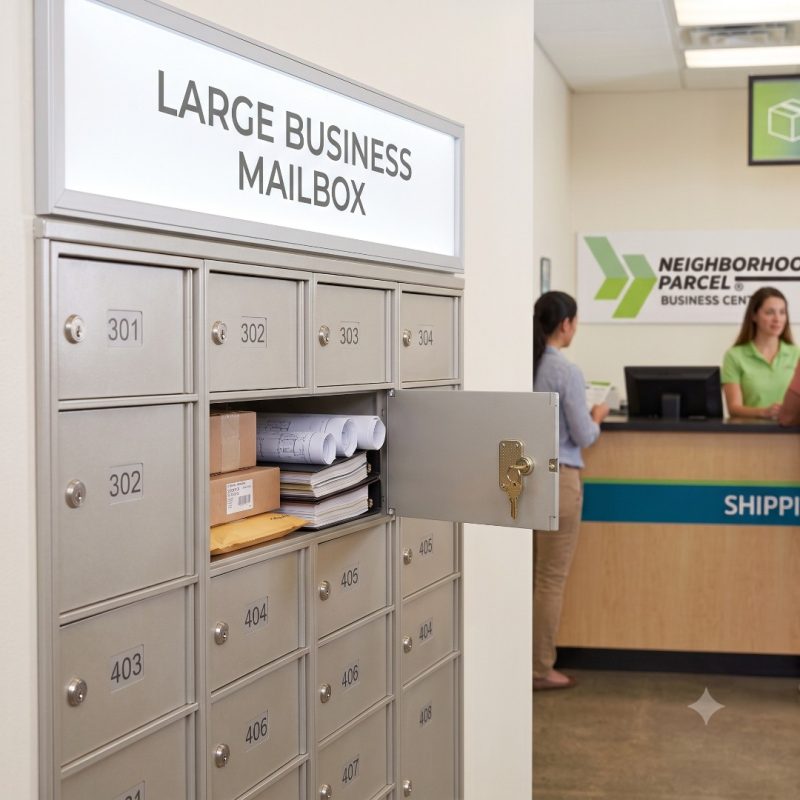
A virtual mailbox is a mailbox at a commercial facility, operated under USPS rules by a Commercial Mail Receiving Agency, with a digital layer on top; our explainer on what a CMRA is covers the regulatory side. In practice: mail arrives at the facility, you get an email alert, envelopes can be scanned so you read contents online, and physical items are stored securely until forwarded, picked up, or shredded. Because it is a genuine street address with a suite number rather than a PO Box, it is accepted in far more places, including FedEx and UPS deliveries that PO Boxes cannot receive.
For privacy, a virtual mailbox does four jobs at once:
- It replaces your home address on the forms, accounts, and filings that feed data brokers, so the address circulating through commercial data is a mailroom, not your residence
- It decouples your mail from your location, letting you move without a change of address that broadcasts your new residence through NCOA-driven list updates
- It secures the mail itself: checks, bank cards, and tax documents sit in a staffed facility instead of an unlocked curbside box; our guide to preventing mail theft explains why that matters
- It gives your business a public-facing address, so registering an LLC never exposes your home; see our overview of mailbox rental for how the physical service works
Setup is regulated, which is a feature: USPS requires every CMRA customer to complete Form 1583 with two forms of identification, which is why these addresses are trusted. Our USPS Form 1583 guide walks through it line by line.
Two honest limits. A CMRA address is a mailing and business address, not a residence: driver’s licenses and voter registration usually require your actual residential address, and requirements vary by state and agency, so verify before assuming. And choose a legitimate, USPS-registered operator with a staffed location you could walk into: so-called reshipping jobs that route parcels through private homes are a known fraud pattern, explained in our piece on reshipping scams and parcel mules.
As for cost, a private mailbox is one of the cheaper line items in a privacy budget; we break down the numbers in our virtual mailbox cost guide.
Special Situations: Business Owners, Landlords, and Public-Facing Professionals
A few groups face specific exposure that deserves its own treatment.
Home-based business owners
Registering a business from home puts your home address into a public database on day one: the state registry, your website’s contact page, invoices, and email marketing footers, which anti-spam law requires to carry a valid physical postal address. The fix is to run the business through a dedicated US business mailbox address for the filing, the website, invoices, and footers. If you already registered with your home address, file an amendment; the old address may persist in historical filings, but the ongoing exposure stops.
Landlords and real estate investors
Tenants, contractors, and anyone browsing county records can find a property owner’s mailing address, and owners of multiple properties are easy to map. Practical steps: hold properties in entities where appropriate (with legal advice), set the assessor’s mailing address for each parcel to your mailbox address, and use it on leases, notices, and rent collection. Rent checks going to a staffed facility also close off a common check-theft vector.
Public-facing professionals
Therapists, attorneys, physicians, agents, journalists, and creators all face clients or audiences who can look them up. Licensing boards often publish an address of record, and many accept a mailing address instead of a residence, so ask yours. Creators should keep fan mail separate from home and check that domain records and newsletter footers do not leak the residence.
Across all three groups the pattern is identical: the exposure comes from mixing your residence into professional records, and the fix is giving the professional world a different, fully legitimate street address.
How Long Removal Takes and How to Keep It That Way
Set realistic expectations; unrealistic ones lead people to quit halfway.
| Phase | Typical effort | Typical wait for results |
|---|---|---|
| Exposure audit | 1 to 2 hours | Immediate |
| People-search opt-outs (major sites) | 2 to 4 hours spread over days | Days to a few weeks per site |
| Search engine removal requests | Under 1 hour | Days to weeks for review |
| Public records changes | Varies widely | Weeks to months, some records permanent |
| Mailing address switchover | 2 to 3 hours of account updates | Benefit begins immediately |
| Maintenance re-checks | 30 to 60 minutes | Quarterly, then twice a year |
The first month does most of the visible work: major people-search listings come down and search results thin out. The following months are about durability. Because brokers refresh from upstream data, a removed listing can reappear if your home address is still flowing through commercial channels, which is why Step 7 matters. People who complete the opt-outs and change their circulating mailing address tend to stay clean; people who only opt out tend to see listings creep back.
The maintenance routine is simple. Every quarter for the first year, re-run the audit searches from Step 1, check the sites in your tracking sheet, and re-submit lapsed opt-outs. After that, twice a year is usually enough. Keep using your mailbox address on everything new.
Also decide what you will not chase. Old archives and long-dead pages with a former address are usually not worth the effort unless they create a current risk. Privacy is risk reduction, not perfection: the goal is to make your current residence hard to find, not to erase every trace that you ever lived anywhere.
Ready to Take Your Home Address Off the Grid?
Removal gets you clean; a private mailing address keeps you clean. MyMailForwarder has operated as a USPS-approved Commercial Mail Receiving Agency in Massachusetts since 2007, holds an A rating with the BBB, and provides a real Massachusetts street address with a suite number for shopping, subscriptions, business filings, and banking correspondence.
Every plan includes mail scanning with email alerts, so you see what arrived without revealing where you live, plus forwarding to more than 220 countries via USPS, FedEx, and UPS. Plans run $330, $450, or $595 per year, each with one bonus month, so you get 13 months of service. Storage runs 30, 60, or 90 days by plan, and Silver and Gold include free consolidation, typically saving 30 to 40 percent on forwarding. Massachusetts businesses can add registered agent service to keep a home address out of state filings too.
Compare the options on our mailbox plans page, then see our step-by-step guide on how to apply for a mailbox address. Questions first? Call (978) 851-0199 and a real person will help you decide whether a virtual mailbox fits your situation.
Frequently Asked Questions
Can I completely remove my address from the internet?
Not completely, and anyone promising total erasure is overselling. Some public records, such as property deeds, are permanent by design. What you can realistically achieve is substantial: remove the easy lookup routes on people-search sites, suppress exposed search results, restrict records where your state allows, and stop feeding new data by using a private mailing address going forward.
How long does it take to remove my address from data broker sites?
Individual opt-outs often process within days to a few weeks, though timelines vary by site and their processes change often. Expect the bulk of visible cleanup within the first month, then plan quarterly re-checks for the first year, because brokers refresh their databases and can relist you if your home address is still circulating through commercial data sources.
Do paid data removal services work?
They automate the same opt-out processes you can do yourself, and reputable ones do save real time, especially across dozens of sites. They cannot erase public records, and coverage varies between providers. If you use one, keep your own tracking list to verify results, and pair it with a private mailing address so removed listings do not repopulate from fresh data.
Can I use a virtual mailbox address instead of my home address everywhere?
For most purposes, yes: shopping, subscriptions, business registrations, invoices, and general correspondence. But some registrations, most commonly driver’s licenses and voter registration, usually require a residential address, and requirements vary by state and agency. Use the mailbox address wherever residence is not legally required, and verify the rules for any government registration before you change it.
What is an Address Confidentiality Program and who qualifies?
Most states run an ACP that gives qualifying participants, typically survivors of domestic violence, sexual assault, stalking, or trafficking, a substitute address for government records, with the state forwarding their mail confidentially. Eligibility, covered records, and enrollment steps vary by state, and applications usually go through a victim advocate, so check your state’s program or ask a local advocacy organization for help.
Will moving to a new home reset my privacy?
Not by itself. A permanent USPS change of address flows into the National Change of Address system, which mailers use to update their lists, so your new address propagates quickly. To make a move count for privacy, route mail to a virtual mailbox instead, give the new residence only where legally required, and complete broker opt-outs before your new address enters circulation.
