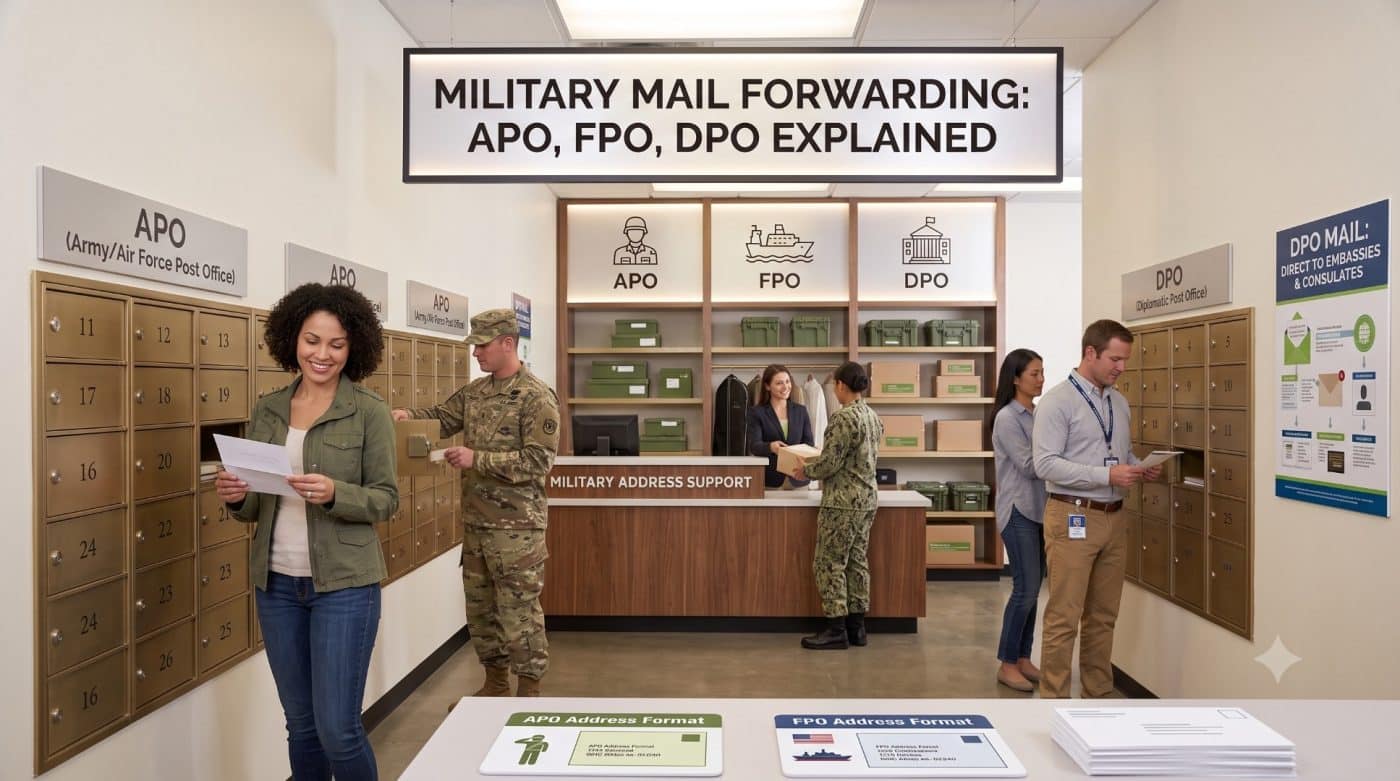
Many US retailers refuse APO/FPO shipping, and deployments break normal mail. How service members use a stateside address to shop anywhere and never miss a document.
Category Archives: American Expats
American Expats Have chosen our mailboxes to handle all their mail and packages while they are overseas. We allow you to manage your U.S Mail from anywhere in the world!
USPS Form 1583 authorizes a mail agency to receive your mail. See the two IDs you need, every notarization option, and how to complete it from abroad.
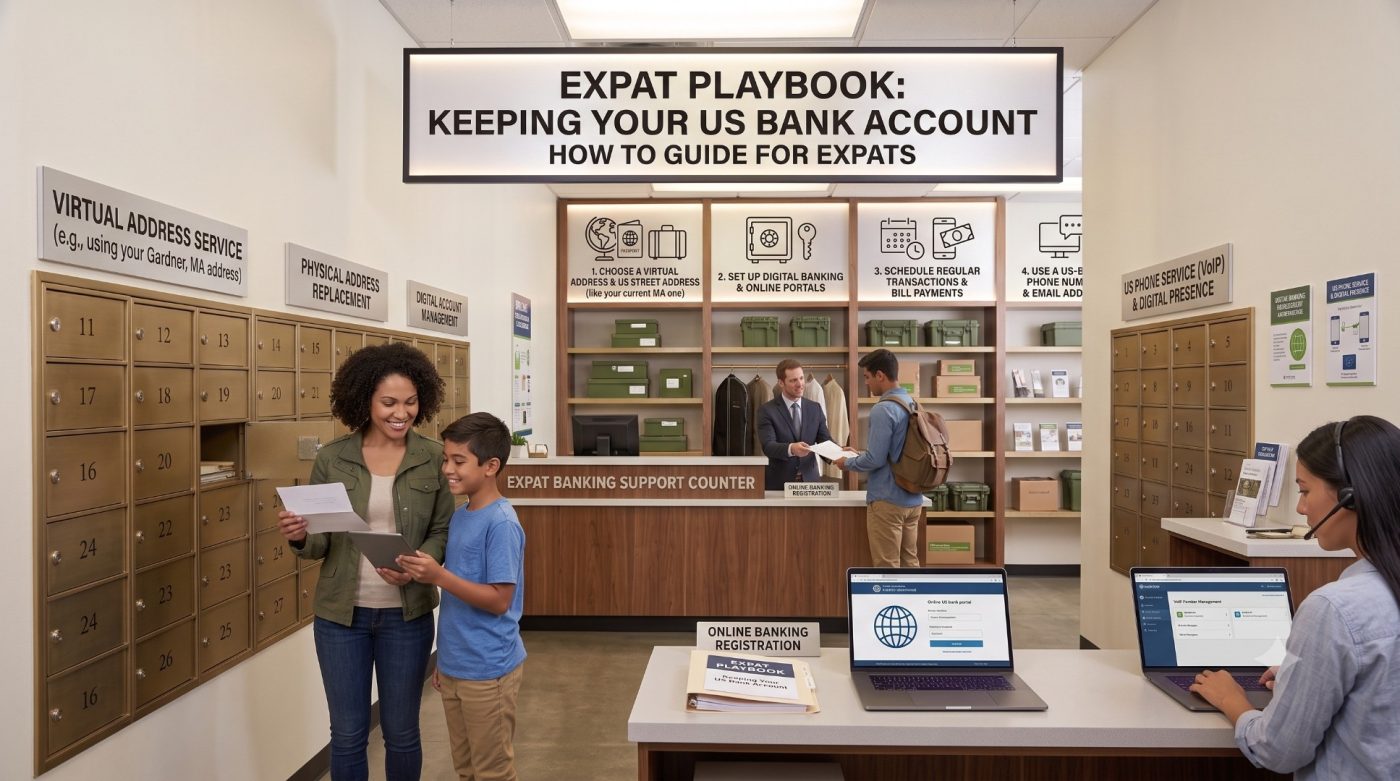
A foreign address on file is the most common reason expat bank accounts get restricted. Here is the address, mail, and documentation playbook that keeps accounts open.
USPS forwarding is free for 12 months and built for domestic moves. Private forwarding gives you a permanent address with global reach. Compare both honestly.
Mail theft feeds check washing and identity fraud, and unattended mailboxes are the target. The habits, tools, and address strategies that actually protect you.
No law makes you keep a US address when you move overseas, and the IRS accepts a foreign one. Banks, brokerages, card issuers and retailers are a different story. Here is who needs what, and the four ways to handle it.
Duties, VAT, and brokerage fees decide the real cost of a forwarded package. How each charge works, who collects it, and the honest way to keep the total down.
If you have never used a mail forwarding service before, the concept can feel opaque. The mechanics are actually straightforward once you understand the difference between the two fundamentally different types of mail forwarding — and once you understand which one actually solves your problem. This guide explains both, walks you through exactly how professional mail forwarding works from day one, and answers the questions that most people have before they sign up for their first mailbox.
The digital nomad lifestyle has officially moved from niche subculture to mainstream workforce reality. By 2025, an estimated 18.1 million Americans identified as digital nomads — a 147% increase from 7.3 million in 2019 — making location-independent work one of the most significant shifts in American professional life in a generation. Globally, the digital nomad population has surpassed 40 million, with Americans accounting for roughly 44% of that total.
The way Americans run businesses has fundamentally changed. By 2025, 22% of the entire U.S. workforce was working remotely — more than 32 million people — and the number of new business applications filed in 2023 alone hit a record 5.5 million, continuing a surge in entrepreneurship that shows no signs of slowing. Of all small businesses currently operating in the United States, 55% are home-based, and 85.8% are run by a single person. The solo entrepreneur, the remote freelancer, the online retailer, the digital nomad business owner, and the expat managing a U.S. company from abroad have collectively become the defining business profile of our era.
Asia has become one of the most exciting frontiers for American expats in 2026. Whether you are drawn by the extraordinary safety and cultural depth of Japan, the high-earning professional environment of Singapore, the affordable and vibrant lifestyle of Thailand, or the rapidly modernizing cities of South Korea, Vietnam, and the Philippines, the region offers something genuinely compelling for every type of expat. According to the InterNations Expat Insider Survey, six Asian countries ranked in the global top ten for expat satisfaction in 2025, with Thailand placing fourth in the world overall.
Latin America has quietly become one of the most compelling destinations for Americans seeking a better quality of life, lower cost of living, and a fresh cultural experience. From the electric energy of São Paulo and the eternal spring of Medellín to the European elegance of Buenos Aires, the region is drawing American expats, retirees, digital nomads, and remote professionals in record numbers.